

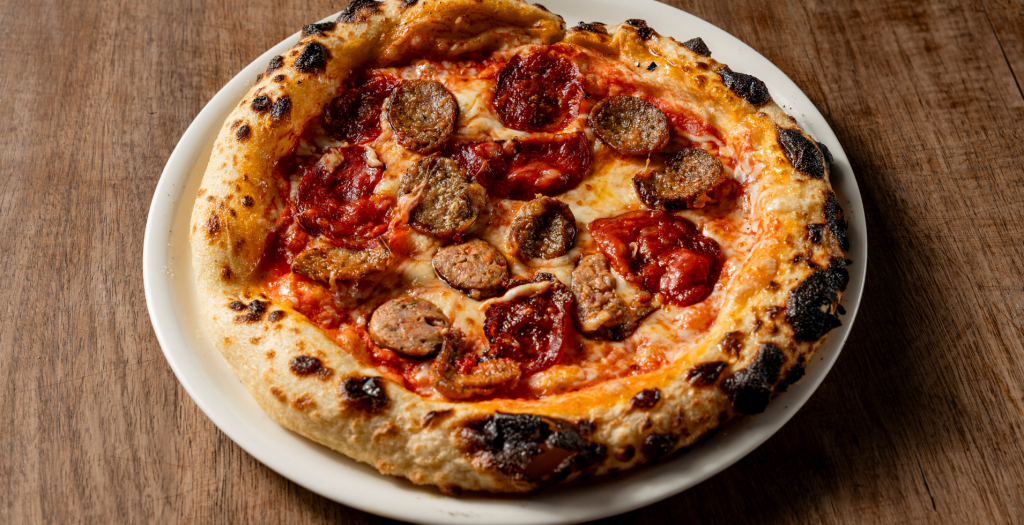
Dough, fermentation, and oven technique: the secrets behind authentic Italian pizza
When someone searches for authentic Italian pizza, artisan pizza in Cancun, or an Italian restaurant with traditional pizza, the first thing they often think about is toppings. In Italy, however, the true quality of a pizza does not begin with what is placed on top.
It begins much earlier.
The foundation of traditional Italian pizza lies in its dough: how it is hydrated, how long it ferments, the temperature of the oven, and how each element is balanced to achieve a light, flexible texture.
At Nicoletta, pizza is understood as an expression of technique and balance, where every detail—from dough preparation to baking—follows the principles of Italian tradition.
The Dough: The True Heart of Italian Pizza
Why great pizza starts long before the oven
The difference between average pizza and authentic Italian pizza lies in the dough.
Traditional dough is made with flour, water, salt, and yeast. But the secret is not simply the ingredients—it is how they are handled.
Proper hydration allows the dough to become elastic and airy. When kneaded with precision and given the right resting time, the internal structure develops, allowing the pizza to remain soft inside with a delicate crispness on the edge.
In many places outside Italy, dough is prepared quickly to speed up service. In a traditional Italian pizzeria, dough is treated with patience.
Quality begins with time.
Fermentation: The Secret Almost No One Talks About
How time transforms texture and flavor
Fermentation is one of the most important processes in pizza making.
A properly fermented dough develops complex aromas and a lighter texture that makes pizza easier to eat. It also allows the crust to expand naturally during baking.
When fermentation is rushed, the dough becomes heavy and rigid. When the process is respected, the pizza achieves the softness and airy structure that define artisan Italian pizza.
This step is invisible at the table, yet it determines the final result entirely.
Hydration: The Invisible Balance
Why the water ratio changes the entire experience
Hydration—the ratio of water to flour—plays a crucial role in the final texture of the dough.
A balanced hydration allows air pockets to develop inside the dough, creating a light structure. It also helps the dough stretch properly without losing its shape.
If hydration is incorrect, the dough can become either too rigid or too fragile.
In traditional Italian pizza, hydration levels are carefully calculated to achieve the perfect balance between softness and structure.
The Oven: Temperature and Speed
Why cooking defines authentic Italian pizza
Another essential element in pizza preparation is the oven.
Traditional pizzerias use ovens capable of reaching very high temperatures. This heat allows the pizza to cook quickly, producing airy crust edges while maintaining a flexible base.
Fast baking prevents the dough from losing moisture and preserves the lightness that characterizes traditional Neapolitan-style pizza.
When pizza is baked at lower temperatures for too long, the dough dries out and loses the softness that defines authentic Italian pizza.
The Myth of Overloaded Pizzas
Why Italian pizza does not rely on excess toppings
One of the most common mistakes outside Italy is assuming that pizza must be heavily loaded with toppings to be appealing.
In Italian tradition, pizza is about balance. The dough should remain the protagonist, while the ingredients complement it without overwhelming it.
Too much cheese or too many toppings can saturate the texture and mask the subtleties of the dough and sauce.
For this reason, authentic Italian pizza is often simple, yet carefully balanced.
The Philosophy of Pizza at Nicoletta
Italian tradition with contemporary character
At Nicoletta, pizza is interpreted through respect for Italian culinary tradition and precise technique.
The dough is prepared with proper fermentation time, balanced hydration, and baked at the right temperature to achieve a light texture.
Within the menu, you can find expressions of this philosophy, such as the Prosciutto pizza, where the combination of tomato, mozzarella, Grana Padano, and prosciutto creates a simple yet elegant harmony.
Another example is the Scampi & Langosta pizza, which blends seafood ingredients with the technique of a carefully executed Italian dough.
These pizzas reflect a fundamental principle of Italian cuisine: balance before excess.
More Than Pizza: A Complete Italian Dining Experience
When pizza becomes part of a culinary narrative
In Italy, pizza is not always treated as fast food. It can also be part of a broader dining experience.
At an elegant Italian restaurant in Cancun, pizza becomes part of a dinner that unfolds naturally: antipasti, handmade pasta, pizza al forno, and desserts that complete the evening.
This approach turns pizza into one more expression of Italian culinary tradition.
Authentic Italian Pizza Begins Before the First Bite
True Italian pizza is not defined by the number of toppings—it is defined by technique.
If you are searching for artisan Italian pizza in Cancun or an elegant Italian restaurant where tradition is respected in every detail, reserve your table at Nicoletta.
Follow us on social media and discover how Italian technique can transform something as simple—and extraordinary—as pizza.