
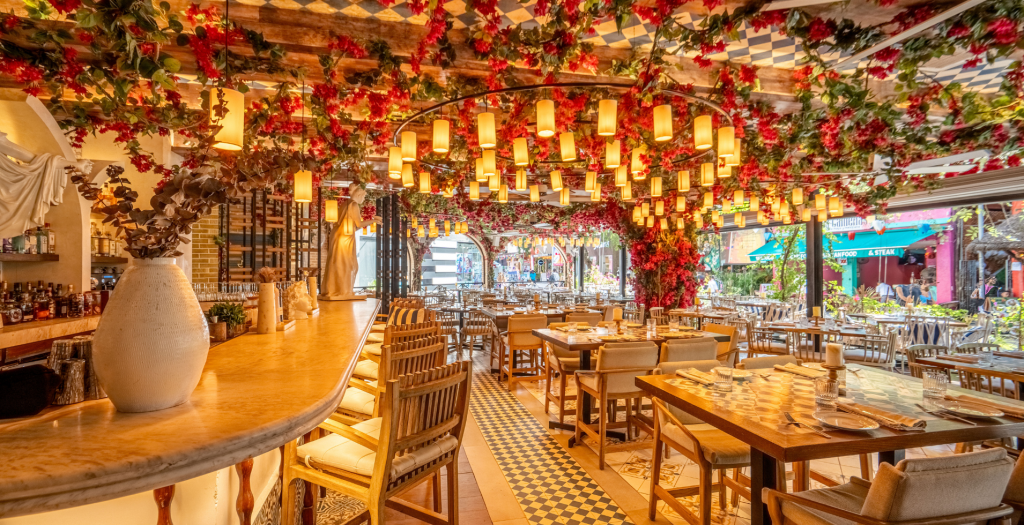
Lighting, Architecture, and Atmosphere: The Invisible Factors That Change Flavor
When someone searches for an Italian restaurant in Cancun or a romantic restaurant in Playa del Carmen, lighting is rarely the first thing that comes to mind. Yet science and environmental psychology confirm something remarkable: light, spatial design, and architecture directly influence how we perceive flavor and how we remember a dining experience.
It is no coincidence that some dinners feel intimate, layered, and unforgettable — while others feel flat, even when the cuisine is technically correct.
At Nicoletta, lighting and design are not decorative choices; they are integral components of the Italian dining experience. Every table is positioned to activate specific emotions and elevate the perception of authentic Italian cuisine.
Lighting as a Sensory Tool
How Light Alters Flavor Perception
Multiple studies in environmental psychology demonstrate that light intensity and temperature alter how we perceive taste.
Warm, dim lighting — characteristic of an elegant Italian restaurant — tends to enhance the perception of sweetness and softness, while cooler, brighter light creates a more technical and detached atmosphere.
In a thoughtfully designed space, lighting can:
- Increase feelings of comfort
- Reduce the perception of time pressure
- Strengthen emotional connection
- Influence how wine and desserts are experienced
In a true Italian restaurant in Cancun, lighting does more than illuminate the table — it shapes the narrative of the evening.
Architecture and Perception: Space Is Also Experienced Through Flavor
Why the Environment Changes the Dining Experience
Architecture is not purely aesthetic. It is psychological.
High ceilings communicate sophistication. Natural textures create warmth. Symmetry fosters a sense of order and coherence.
In a romantic restaurant in Cancun or Playa del Carmen, table spacing, orientation, and focal points — such as lagoon views or softly illuminated bars — directly influence emotional comfort.
When the environment feels harmonious, the brain interprets the entire dining experience as higher quality.
Atmosphere: The Invisible Rhythm
When Light, Service, and Sound Work Together
A memorable dining experience does not rely on a single element. It is the integration of lighting, architecture, service rhythm, and ambient sound.
In Italian culture, dinner is ritual. It is never rushed. It unfolds in sequence.
A truly authentic Italian restaurant integrates:
- Warm, strategic lighting
- Service that respects pacing
- Spaces that encourage lingering after dinner
- Design that balances elegance and comfort
At Nicoletta, each table is designed to create intimacy without isolation. The environment supports conversation. Time feels extended.
And when time feels slower, the experience feels deeper.
Neurogastronomy: When the Brain Participates
Dining Is Interpretation, Not Just Taste
Neurogastronomy explains that the brain constructs flavor by combining visual, auditory, and emotional stimuli.
A traditional Italian restaurant that understands this principle does not focus solely on the kitchen — it considers the entire sensory framework.
Golden lighting can intensify the perception of richness in red wine. A well-lit table enhances the natural colors of Italian cuisine. Soft shadows create a sense of privacy.
When someone searches for the best Italian restaurant in Cancun, what they are truly seeking is a coherent multisensory experience.
Why Some Tables Feel More Special Than Others
The Power of Visual Intimacy
Not all tables feel the same. Some create immediate connection.
Design psychology suggests that focused lighting over the table creates a “micro-stage,” subtly separating the guest’s experience from the surrounding space. This enhances exclusivity and emotional presence.
In a restaurant for anniversary dinner in Cancun, this effect becomes essential. Lighting defines the couple’s space. Architecture frames the moment.
Nicoletta applies this principle so that each table becomes its own private universe within a refined setting.
Light Is Part of the Recipe
The psychology behind a well-lit table proves that flavor does not exist solely on the palate.
Lighting, architecture, and atmosphere directly influence how we perceive Italian cuisine — and how we remember it years later.
In an authentic Italian restaurant in Cancun or Playa del Carmen, every detail must be intentional.
If you are seeking a dinner where the environment elevates every conversation and every course, reserve your table at Nicoletta and discover how light, design, and gastronomy come together in a truly unforgettable experience.
Follow us on social media and become part of a table where Italy is lived with contemporary elegance in the Caribbean.